English
The shared language of the classroom — morning circle, storytelling and show-and-tell build everyday fluency and confidence.
At Pegasus, children grow up at ease in three languages — English, Mandarin and Japanese — absorbed naturally through songs, stories, play and real conversation, from 17 months to six years.
For many families in Singapore, language is never just language. It is how a child greets a grandparent, follows a bedtime story, makes a first friend and feels that they belong. When a preschool honours more than one language, it honours more than one part of who your child is.
Pegasus International Preschool is a genuinely trilingual, Reggio Emilia–inspired preschool in Novena. Instead of treating English, Mandarin and Japanese as separate subjects, we let all three live inside the ordinary moments of the day — so children grow comfortable moving between languages long before they are ever asked to study one.
The early years are a remarkable window. Between roughly 17 months and six years, a child's brain is wired to listen, imitate and make sense of the sounds around them. Young children pick up new languages the way they learn to walk — through repetition, warmth and everyday practice, without the self-consciousness that comes later.
This is why we introduce three languages while children are still small. At this age they are not memorising vocabulary lists; they are simply hearing Mandarin in a familiar song, noticing a Japanese greeting at circle time, and answering a teacher in English. Each language becomes another comfortable way to understand the world, rather than a lesson to master.
Growing up with several languages also builds more than fluency. Children who move between languages early tend to listen more closely, switch between ideas more flexibly, and feel genuine curiosity about people who speak, look and celebrate differently from themselves.
Children do not learn languages as isolated drills. They absorb them through the things they already love — songs, stories, pretend play, classroom routines and unhurried conversation with adults who care about what they have to say.
English remains the main language of our classroom, so every child has a shared, confident footing. Woven through the day, Mandarin and Japanese appear naturally: a counting rhyme here, a greeting there, a story shared at rest time, a word for a colour during art. Nothing feels like a test — it simply feels like the day.
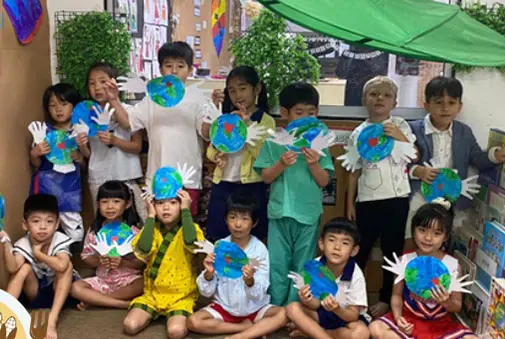
Language is never taught at a desk. It lives in the songs we sing, the stories we share and the small moments that fill a preschool day.
The shared language of the classroom — morning circle, storytelling and show-and-tell build everyday fluency and confidence.
Native Mandarin teachers make tones feel natural through songs, games and playful conversation woven into the day.
Japanese-language sessions led by an experienced teacher offer a warm bridge for Japanese families and a joyful new sound for everyone.
Melody makes new words stick. Children hum counting songs and greeting rhymes across all three languages without even noticing.
Familiar picture books and daily routines repeat the same warm phrases, so language grows through comfort and repetition.
Festivals, food and celebrations bring each language to life, connecting words to real people, places and traditions.
A morning at Pegasus flows gently between languages. Children gather for circle time and greet one another, count together and sing — sometimes in English, sometimes in Mandarin, sometimes in Japanese. None of it is announced as a language lesson; it is simply how the group begins the day.
Through free play, art, snack and rest, teachers keep the conversation going in the language of the moment. Over weeks and months, children begin to recognise, respond and eventually speak — each at their own pace, always encouraged, never pressured.

A child's home language is part of their identity, and we treat it that way. Whether your family speaks English, Mandarin, Japanese or another language altogether, your child's way of speaking is welcomed at Pegasus — never corrected away or treated as something to fix.
Adding new languages does not replace the one spoken at home; it grows alongside it. When children see that the words they bring from home are valued, they feel secure enough to reach for new ones — and that sense of belonging is where real language learning begins.
A trilingual environment gives children more than words. Playing, singing and problem-solving alongside friends from many backgrounds, they learn that difference is ordinary and interesting — a quiet, everyday kind of open-mindedness.
Children who grow up hearing several languages tend to greet new people warmly, adapt easily to new settings, and carry a confidence that serves them well long after preschool — in Primary School and in a world that keeps getting more connected.
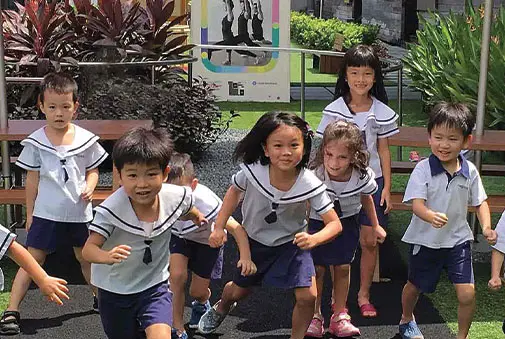
Across the day at Pegasus, a trilingual start quietly builds skills that reach far beyond language:
Children join at their own starting point — no prior Mandarin or Japanese is needed — and grow at a pace that feels natural and joyful.
Yes. Pegasus is a genuinely trilingual preschool. English is the shared language of the classroom, while Mandarin and Japanese are woven naturally through songs, stories, routines, play and conversation across the day.
No. Young children are wired to absorb several languages at once. Because each language is tied to real, familiar moments rather than formal lessons, children learn to move between them comfortably and at their own pace.
Yes. English remains the main language of the classroom, so every child has a secure, shared footing. Mandarin and Japanese are added naturally throughout the day, never in place of English.
Yes. Japanese-language sessions are led by an experienced teacher and are part of the trilingual day for every child — a warm bridge for Japanese families and a joyful new language for everyone else.
Not at all. Children join at their own starting point with no prior Mandarin or Japanese needed. They absorb the languages naturally through play and conversation, and their home language is always welcomed.
Join the Pegasus Parent Journey and receive helpful preschool readiness guides in your inbox.
Book a free, no-obligation school tour to see how English, Mandarin and Japanese come to life — or start your enrolment enquiry today.